Anna's Blog

A (very!) long overdue update.
August 25th, 2014This post is thanks to Ani Bolton, who tagged me in a blog hop. Thanks, Ani, for giving me the kick to finally pay some attention to my poor neglected blog! If you have a chance, be sure to check out Ani’s book Steele and Song. It’s a fabulously inventive, thoughtful, thrilling, exciting, steampunk romance/adventure. Really great read.
And now on to the blog hop questions!
**What are you working on?
Right now I have a couple of projects going on. I’m primarily working on a brand-new series that should be ready to launch later this year. (3 books done, nearly halfway through the 4th). It’s a fantasy series based on Norse Mythology, which I’ve always loved.
Then on the back burner for the moment, but still track to hopefully finish this year, I’m working on a sequel to Margaret Dashwood’s Diary. And I’m also writing a novella featuring Elizabeth Bennet and Mr. Darcy that will be part of a Regency Romance anthology due out this winter.
Oh yes, and I’m also working on homeschooling these two adorable little moppets:

And holding/carrying/nursing/trying-not-to-gobble this little guy’s cheeks all day long. That’s the hardest part of the job, I tell you (trying not to gobble him up, that is).

**How does your work differ from others’ work in the same genre?
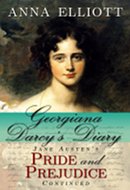
Hmm, tricky question. I think my diary-format approach to Jane Austen sequels is a bit different from most of the other books in the genre. Not that I chose it specifically in order to be different, it just happened to feel right for the characters’ voices.
**Why do you write what you do?
Wow, another tricky one. Really, I just write the stories that jump into my head, begging me to tell them.
**How does your writing process work?
I’m generally speaking on the planning side of the great plotter/pantser debate. I love outlines. I love having a gameplan, both of a novel overall and of each chapter and scene that I’m working on. That said, there are always surprises in writing a novel. Always. That’s my favorite part of the job, actually– when I’m writing and a sudden lightening bolt hits, and I’m discovering something about my characters that I never knew before, or introducing a plot twist that I never planned for at all.
Up next on the blog hop is Josi S. Kilpack .
Josi hated to read until her mother handed her a copy of The Witch of Blackbird Pond when she was 13. From that day forward, she read everything she could get her hands on and accredits her writing “education” to the many novels she has “studied” since then. She began writing her first novel in 1998 and never stopped. Her novel, Sheep’s Clothing won the Whitney Award 2007 for Mystery/Suspense. Lemon Tart, the first book in the Sadie Hoffmiller Culinary Mystery series was a finalist in 2009. Josi currently lives in Willard Utah with her husband, children and super-cute cat.
Stop by her blog next week for her blog hop entry!
Posted in Uncategorized | No Comments »
Coming this summer . . . .
April 21st, 2013I’ve had some lovely inquiries lately about what I’m working on next. So . . . .
This is a working cover, so still subject to change– but I was too excited not to share! With any luck, it should be available this summer at book retailers everywhere.
Posted in Uncategorized | 3 Comments »
Barnacles and Swiss Cheese, or How to Cook a Squash in 5 Easy Steps, or Why I’m Glad My Husband Works from Home
March 16th, 2013I love to cook recipes with winter squash–butternut, acorn, spaghetti squash; we’re big fans of them all. But I hate hate hate trying to hack the things open so that I can cook them. The skins are so tough, the knife slips and slides . . . anyway, that’s why I was delighted when I read the tip on some cooking site online that you can just pop them in the microwave whole and cut them open afterwards, when the skins are nice and soft. Wow–totally easy, right? Should you want to give it a try yourself, here’s what I did:
1. Wash squash and prick skin all over with a fork
2. Place in a shallow baking dish and microwave for approximately 15 minutes, depending on the size of your squash. (15 minutes is good for a medium size acorn squash).
3. While taking the squash out of your over-the-stovetop microwave, manage to fumble and drop the entire setup–shallow baking dish, squash and all, directly into the pot of boiling pasta you have on the stove. Thereby sending up a tidal wave of boiling water that splashes ALL OVER YOU.
4. Shriek for your husband to come and fish the acorn squash and bowl out of the boiling pasta while holding your scalded hand under the cold water faucet and trying to reassure your wide-eyed children. (Both the squash and my hand were fine).
Now, you might think, given how that whole experience turned out, that I would have been wary of trying the squash-microwave trick again. But no. I also had a spaghetti squash. So a few nights later, I tried cooking it in the microwave. Be sure to prick the spaghetti squash ALL over, the instructions said, to make sure that it doesn’t explode. So, my 5 step process:
1. Dutifully prick squash all over with a fork.
2. Place in microwave for 20 minutes (it was a pretty large squash).
3. At some point during the cooking process, jump a mile when the door to your microwave abruptly BURSTS open because the squash inside has exploded with a bang like a firecracker.
4. Repeat step 4 above (shriek for husband), who comes in, eyes the carnage, and says, You know what you need? You need a camera. Yes, that’s really what he said. Evidence below.

5. Spend an hour cleaning approximately 6 billion strands of spaghetti squash off of the inside of the microwave and pretty much every other nearby surface of the kitchen while above-mentioned wide-eyed children look on.
If there is some cosmic system for bonus points to be earned such situations, then quite frankly I want it credited to my account that on neither occasion did I utter one single bad word, not even “darn.” Although to be honest, darn would have been so inadequate that it would have been totally unsatisfying to say anyway. However, just yesterday my six year old made a mistake, and having to my knowledge never heard an actual ‘bad word’, came out with the exasperated expletive, “Oh, barnacles and swiss cheese!” Isn’t that completely and totally awesome? I’m going to have to remember it myself for the next time I’m frustrated. Or the next time I try to cook a squash. 
In other news, thanks to a superhero effort by my awesome husband, Kitty Bennet’s Diary is available NOW on Barnes and Noble and Amazon. I’ll make a formal announcement here and in an e-mail to anyone who’s signed up to be alerted once it’s available on all channels (Kobo, Smashwords, Apple, etc), but Nook/Kindle readers can buy it now, and hopefully it will be available everywhere else within the next few days.
Posted in Uncategorized | 1 Comment »
Happiness Comes
February 15th, 2013Happiness is a choice. That’s what I always tell my girls. You cannot sit in a grumpy huddle, waiting for the world to make you happy. By all means, change the world–but when you can’t change the world, change your attitude. Or in other terms, Baby girl, I say to my oldest when she groans about handwriting practice, You cannot change what you need to do right now, but you can chose to do it with a smile.
(Oooh, such a typical mom thing to say, I know. I fondly hope that one day my girl will hear those words coming out of her mouth when speaking to her own son or daughter, catch herself, do the classic Macaulay Culkin “Home Alone” face and scream, Ahhhhhhh!)
But anyway, one of the (many many) things that made the days and weeks after losing the baby so hard was that happiness was not a choice I could make. I could stay busy (homeschooling 2 little kids, this was not exactly a challenge), but I was still sad. I could count my blessings–and I did–and there were many–and I was beyond grateful for every single one. But I was still sad. I could know deep in my soul that knowing my lost baby even for the few short months I had her was a privilege and a joy, and that I could never have chosen not to know her, even if I had been warned from the start how it would end. But I was still so, so sad.
I finally decided that I just had to make peace with the sadness, accept that for now, that was where I needed to be. And I discovered that there is a beauty in sadness, in a way. Like a painting done all in shades of blue and gray, or music played in a minor key.
Only then did happiness start to come back. Not the same sort of happiness I had before. That was another hard lesson to accept: that happiness would never, ever feel exactly the same way again. That the broken corner of my heart always will be sad. But a different and yet still beautiful sort of happiness did come. Watching my girls race ahead of me on a visit to the zoo. Hearing my three year old ask, Mama, what in tarnation is that? (No idea where she picked that one up; I promise you, I do not walk around my house exclaiming, What in tarnation . . . ). Watching a movie in bed with my husband late at night. Short, unexpected bursts of happiness would sneak up and surprise me and suddenly lighten my heart. As though hands of grace had suddenly touched me, helping me to get through another day.
Happiness is a choice, I do still believe that. But sometimes, it’s also just a gift.
For anyone who is going through similar loss or knows someone who is, I found this website so beautiful and incredibly helpful:
http://pregnancyloss.info/
Posted in Uncategorized | 3 Comments »
Sunday Smiles
February 3rd, 2013Since the miscarriage happened on a Sunday, Sundays have been kind of hard days to get through lately. It shouldn’t really make a difference, but somehow it’s hard not to keep re-living the memories of that day. So this Sunday, I was in the car with my 3 year old, and suddenly she stared asking lots of questions about her great-grandmother (Nate’s grandmother) who passed away earlier this year. Grammy is dead, but she can still see us, and we can see her in our hearts, right, Mama? That sort of thing.
You know those all those stories about children who in hard times suddenly say something absolutely lovely and profound and wise beyond their years? My midwife told me a beautiful story about how when she miscarried, then got pregnant again, her 5 year old son told her very definitely that the coming baby was the same one they had lost, just back in a new and this time perfect body. Well, after I had answered her questions as well as I could, Vivi got very quiet, and I could tell she was thinking hard. Maybe this is it, I thought. She’ll say something beautiful, something miraculous and profound that will make me see everything that’s happened with new eyes.
“Mama,” Vivi finally said, “I am trying to figure out whether God piles everything up on top of Himself.”
Huh? I still have absolutely no idea what the sweetheart meant. Ah, well. It made me smile. That’s a grace and enough of a miracle for right now.
Posted in Uncategorized | No Comments »
Sad News
January 30th, 2013Apart from the odd story about my children, I tend to keep my personal life mostly separate both from my professional one and from this blog. But I have at the moment what feels like about six thousand unanswered e-mails from readers piled up in my in-box, a huge number of which are inquiries about when Kitty Bennet’s Diary will be released. And I really hope at least some of those who have written to me wander over here and read this post, because I always, always answer all my e-mails and I feel terrible that so many readers out there must be wondering whether they’ll ever hear back from me. But at any rate, I am so grateful for every one of the e-mails I get from all the wonderful readers out there, and I hate feeling like I’m disappointing everyone, so I feel like I really need to offer an explanation of what’s been going on. And I thought about writing a general ‘there’s been a family tragedy’ kind of post, but that seems . . . I don’t know . . . kind of silly, at least for me. It’s not as though posting about it here will make it sadder or harder. So here it goes:
We were expecting a new baby this summer. But very sadly, just after the second trimester had begun, the baby died. It’s been . . . I make my living as an author, and I still can’t think of the right words. Heartbreaking, hard, exhausting . . . it’s been all of those.
I truly love Kitty Bennet’s story, and I’m so excited to share it with everyone–and I will, I promise, and hopefully soon. But going through the copy edits on a book that is *mild spoiler alert* absolutely filled with babies and pregnancy and birth is just beyond me right now.
Thank you so much to everyone who has read the first two books of the Pride and Prejudice Chronicles series, and to everyone who has contacted me saying how much they’re looking forward to this third book’s release. It means so much. And thank you for being patient right now. I will be okay, even if I’m not at the moment. I’m lucky, I know, to have such a happy life to get back to when I can stop being sad.
Posted in Uncategorized | 4 Comments »
On Strong Heroines and Girly Girls
January 9th, 2013My older girl (age 6) is now at a point where we’re reading real chapter books together. Literally together, actually–she reads 1 paragraph per page. But anyway, as you might expect, I LOVE this part of our time together. I (obviously) love reading, love a good story, and getting to share books with my girl that I remember loving when I was her age is just amazing and so much fun. I have, however, noticed a kind of interesting trend about the girl main-characters of many of the books we read together–one that the more I think about it, the more I find it a bit troubling.
We tend to read a lot of historical fiction and fantasy (just my girl’s personal preference) and I’ve noticed something about the heroines: by overwhelming majority, they tend to be ‘tomboy’ type characters. Actually, I kind of hate that term, but I can’t off the top of my head think of a better one to describe the kind of character I mean. In what is starting to feel like a vast majority of the children’s books I find, the main character (if she’s a girl) is the kind of girl who shuns all things ‘girly’ and wants to do ‘boy’ things. If it’s historical fiction, she often rebels against a female authority figure (mother, grandmother, aunt) who wants her to wear pretty dresses and learn to cook and sew. She digs for worms in the dirt, wants to be a horse trainer, a sea captain . . . If it’s a fantasy book, she learns to hunt with a bow and arrow and fight with a sword . . .
And not that there’s anything wrong with any of those choices– and in many ways, I appreciate these sorts of characters and books, I really do. They’re an excellent chance for me to talk to my daughter about how the opportunities available to women have changed over the course of history–how so many career options that were once all but impossible for a girl to consider are now absolutely available. But . . . I have to say, in regards to the kind of stories we’re telling (or reading) I also think it’s possible to swing too far the other way.
Now, please don’t misunderstand me. I am ALL FOR girls and women having the opportunity to pursue their passions, regardless of traditionally labeled gender roles. Heaven help anyone in authority who ever tells either of my daughters within my hearing that they can’t pursue a certain career path simply because they are girls. That is a huge part of the reason I choose to homeschool: I want my children (girls and boys–that is, if I ever have any boys) to be free to discover their interests and passions and run with them. If my girls want to be astronauts or horse trainers or sea captains, I’ll cheer them on all the way. But what if my daughters passionately want to be fashion designers . . . ballerinas . . . heck, makeup artists? Can’t they still be brave and interesting and strong women?
I guess the question I’m asking is: all these books with the heroines who shun all things usually considered feminine and embrace goals usually associated with the male– read enough of them, and don’t you start to kind of get the impression that what our culture is really collectively suggesting is that in order to be brave . . . interesting . . . worthy of carrying a story and being a heroine . . . a girl needs to essentially act more like a boy? Again, it’s not that I have any problem at all with girls wielding swords or driving trucks or shunning all things pink and sparkly if that’s what they want. But why does it have to be portrayed as an either/or? Can’t a girl love earthworms and sparkly pink nail polish at the same time? Can’t she be athletic and strong and still wear dresses when she wants to?
My oldest has always been a very athletic kid. She got a bike from her grandparents for her 5th birthday, and literally within a week she was riding without training wheels and (with no push from anyone except her own firecracker self) accompanying her father on 6 mile rides. Crazy athletic, that’s just how she is. But she also loves to wear dresses and twirly skirts–it’s rare I can convince her to wear anything else–which doesn’t work especially well on a bike. Her solution is to wear bike shorts UNDER her twirly dresses, and have me rubber-band the skirt of the dress up behind her so that it will stay out of the way of the pedals and spokes. Which is awesome–it’s one of my absolute favorite images of my girl that I’ll remember forever about the age she is now: seeing her roll in, flushed and healthy from a long bike ride, with her rubber-banded skirt streaming out behind her like a frilly pink raccoon’s tail. My favorite part, though, is that to her, nothing about that is anything extraordinary. No one has ever told her she can’t be both girly and athletic. No one has ever suggested that she can’t love pink dresses and still be strong. So to her, there’s not conflict there at all.
My hope for both my daughters is that they grow up into a world that agrees.
Posted in Uncategorized | 3 Comments »
A Thanksgiving Post
November 24th, 2012So, Monday night of this week, I was having kind of a sucky evening. I won’t bore anyone with details, but it was nothing life-changing or tragic, just . . . sucky. And then I watched this week’s episode of Castle–and emerged an hour later, completely cheered-up and smiling. The episode (titled After Hours) was funny and suspenseful and romantic and just overall brilliantly written and acted. But apart from my unashamed Castle fan-girling, there was another reason the show made me smile.
Now, I have an amazing husband who has both cheered me on and picked me up and dusted me off more times than I can possibly count. I have two gorgeous baby girls who make me laugh* and count my blessings every day. But Monday night, Castle reminded me of the incredible potential tv, books, movies and all other forms of stories have: the power to cheer our hearts, touch our spirits, and lift us out of ourselves–whether we’re stressed, tired, or even struggling to find the light in a truly dark and hopeless place. And that was exactly what I needed to remember just then: why stories matter so much.
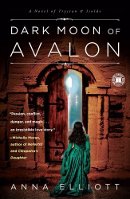
I love every single fan e-mail or note or comment I get–seriously, could not love them more. But I will never forget the first fan-message I got that was of a somewhat different kind. I’ve gotten others since, but this was the first, and it was from a reader who had just finished my first series, the Twilight of Avalon trilogy (a retelling of the Trystan and Isolde legend). What she wrote was something along these lines: “I know it sounds crazy, but I was going through a really bad time in my life when I read your books, and reading about Isolde being so strong through all the troubles she faced helped me to be strong, too.”
And please don’t think I’m writing this to be self-congratulatory at all–like, Go me, look how meaningful my books are. Gah!–no. Of course I try to make my stories the best they can be. But at the end of the day, I’m just telling stories. It’s the magic of the reader/book interaction that leads some readers to connect to my characters’ journey, take from it something that they need. And it’s the most amazing and humbling part of this job that I get to be in any way a part of that magic.
Castle star Stana Katic recently posted to her facebook page that anyone wanting to send her a gift should make a donation to a charity. One of my favorite hobbies is sewing handmade dolls and sending them to children in need around the world, and I’ve made loads of this sort of donation–but I want to send these ones off in a spirit of thanks to Stana Katic, Nathan Fillion, Andrew Marlow (show producer), Shalisha Francess (After Hours episode writer), and every single other crew or cast member who works on Castle. And I’m sure they’ll never read this post or know how much I needed this week’s episode–but that’s totally okay.
Donna Tartt once wrote: “The first duty of the novelist is to entertain. It is a moral duty. People who read your books are sick, sad, traveling, in the hospital waiting room while someone is dying. Books are written by the alone for the alone.” This Thanksgiving week, I’m grateful for all the stories I’ve been touched by myself, and incredibly grateful that it’s part of my job to send new stories out into the world, waiting to be found by whoever may need them.
These dolls will be heading off to the sweet children at an orphanage in Ghana and this amazing initiative that rescues children from Nepal’s prisons:

And these will be hospital buddies for children undergoing treatment for sickle-cell anemia at Grady Memorial Hospital

*case in point:
3 year old, while scribbling on paper: I’m writing a story!
Mother-in-law: Oh really? What’s your story about?
3 year old: I don’t know. I can’t read.
Posted in Uncategorized | 1 Comment »
Princess Mama
October 31st, 2012I have a ring, a $5 cubic zirconia ring that I wear exclusively because it is (along with the emergency mini-boxes of raisins and sticks of sugar-free gum in my purse) part of my bag of tricks for when I’m stuck in traffic or waiting in line with my girls. Look! You can wear my ring! is usually good for 10-15 minutes of entertainment value at such times. (I’m pretty sure that there’s a codicil to Murphy’s Law which states that if you loan your children your real engagement ring, they will drop it down the car seat cushions, forcing you to spend an hour ripping the car apart to find it. That $5 CZ ring? Has not been so much as misplaced. Not even once.)
Now, Vivienne, my youngest, is very into asking me ‘why’. I know most children go through the ‘why’ phase sometime between 2 and 3–but for her it started before she turned 2 and now at just-turned-3 shows no signs of passing, such that I’m starting to think of it as more of a personality trait. She is just a girl who always wants to know the whys and wherefores of most every detail of our lives. So. The other day in the car, she asked me, “Mama, why do you have your ring?” And I, in that I-am-simultaneously-concentrating-on-crazy-traffic-and-wondering-what-to-cook-for-dinner-and-have-approximately-three-spare-brain cells-to-come-up-with-a-satisfying-answer, said, completely off-the-cuff: “So that I can pretend I’m a princess.”
Well. It’s so funny and completely unpredictable what will make a big, lasting impression on your kids. My off-the-cuff answer made a HUGE impression on Vivi. She now refers to the ring with wide-eyed-wonderment as my ‘princess ring.’ Which the other night resulted in this exchange, when I was called in to help her in the bathroom. (Apologies in advance for the mild bathroom humor; this was just way too funny not to share).
Vivi, catching sight of my ring: Oooh, Mama, are you pretending to be a princess right now?
Me: Yep, that’s right. In fact, you should probably start calling me ‘Princess Mama’
Vivi, apparently following a script sent directly from the gods of comedic punchlines. And no, I swear I am not making this up: Princess Mama, can you wipe my bottom?
And that, my friends, is the great, quintessential truth of motherhood: pretend you’re a princess all you want, but the–ahem–job description remains pretty much the same. And really, I wouldn’t have it any other way. I may not exactly love all parts of the job equally, but I do love that every part of the job is mine. And hey, occasionally getting called Princess Mama never hurt anyone.
Posted in Uncategorized | 1 Comment »
Governesses, Gold Diggers, and Great Ladies: The Roles of Women in Jane Austen’s Novels
September 27th, 2012I was thrilled to be asked to take part in a roundtable discussion with Patrice Hannon and Tracy Kiely, two fellow writers of Jane Austen-inspired works as part of the Austenesque Extravaganza going on now. We had an e-mail conversation about the roles of women in Jane Austen’s novels, which you can read below. Part I of our conversation is here.
Patrice Hannon: Emma is certainly punished for her (selective) snobbishness regarding her friendly neighbors, the Coles, when she fears she’ll be left in “solitary grandeur” on the night of their party. It’s worth noting that one of Austen’s best friends was Anne Sharp, governess to her brother’s children. Anne Elliot’s noble cousins are “nothing” to Anne because they possess “no superiority of manner, accomplishment,or understanding.” How much more there is to admire not only in Mrs. Weston but Jane Fairfax, who narrowly escapes ending up as a governess herself. Both are rewarded–and rescued–with good marriages. To say nothing of Elizabeth Bennet!
Anna Elliott:
That’s an interesting point you raise with the issue of characters being ‘rescued’ by good marriages. Austen gives Jane Fairfax and others happy endings–but she also gives us a glimpse of the darker side of women’s place in society, it seems to me, by showing what can happen to a single woman if there is no such good marriage option available. The poverty of the Miss Bates’ . . . and then there’s Charlotte Lucas, who might well have turned into a Miss Bates figure in old age if not for her marriage to the pompous and pretty much dreadful Mr. Collins. Elizabeth Bennet condemns her for marrying Mr. Collins. But did Jane Austen herself condemn Charlotte’s choice? I’m not so sure.
Tracy Kiely: I would actually disagree that Jane awarded Jane Fairfax with a good marriage. Frank Churchill is not a nice man, in my opinion. He not only toyed with Emma’s affections all while secretly engaged to Jane, but he openly flirted with Emma in front of Jane. One could make the argument that Jane is showing what happens when a woman is so well-mannered that she loses her sense of self. I don’t think any of Jane’s heroines would have tolerated such behavior from their future husbands. With Jane Fairfax, I think Jane Austen is advising women to stand up for themselves and demand to be treated with respect. All Jane Fairfax won with her demure manners and polite ways was a husband who didn’t take his commitment very seriously.
Patrice Hannon: Of course, Frank is no Mr. Knightley just as Jane is not the heroine, but she does stand up for herself in the end, and there’s every indication—as Mr. Knightley says—that once they’re married his character will improve under her influence. That character is flawed, to be sure, but he’s rich, handsome, witty, charming, and in love with her—as she is with him. Given the alternative, I think Jane Fairfax has done well, though not as well as Emma.
As you suggest, Anna, although Elizabeth Bennet can’t feel the same way about Charlotte Lucas once she agrees to marry Mr. Collins, I think Austen was more sympathetic (though in life she couldn’t make the same compromise herself, that is, to marry without love). She saw how terrible Charlotte’s choice was—to marry an unappealing man and have her own comfortable establishment, staying as far away from her husband as reasonably possible, or to remain single forever (being plain and on the shelf) and suffer the fate of an utterly dependent woman, to be a spinster, an unwelcome weight on her family forever. There’s a conversation in the wonderful fragment The Watsons that shows this very debate between Emma Watson and her sister. I love when Emma Watson says she would rather be a teacher at a school than marry a man she didn’t love, and her sister’s retort is basically that Emma has never been at school or she wouldn’t say such a thing so glibly. Austen’s heroines hold very high-minded romantic views on the subject, but I do think Jane herself was more understanding of a young woman like Charlotte’s predicament.
Anna Elliott:
Patrice, that’s the view of Frank Churchill that I’ve always had, too.
Though Tracy definitely puts an interesting slant on it, I’m going to
have to give that some thought. Would Frank Churchill have turned into a
Wickham or a Willoughby, given other circumstances? It’s very interesting
to theorize about the way Jane Austen’s life and her own romantic history
fueled the stories and characters she created. Speaking of, do either of
you have theories about the mystery man whom Cassandra claimed was about
to be engage to Jane, but died? Did he even really exist?
Tracy Kiely: I agree that Charlotte is depicted as a woman between a rock and a hard place. She doesn’t want to be dependent on her family,
but then deep down she doesn’t want to be married to Mr. Collins either. (And who would?) For the longest time, I thought that she was making the best of a bad
situation, but then, upon my sixth or seventh reading, it struck me of the impact of Charlotte’s bad mouthing of Lydia and Mr. and Mrs. Bennet’s parenting skills to Mr. Collins. He runs with the story to Lady Catherine – as he does with everything – and then Lady Catherine spreads the story further. It’s even implied by Mr. Collins that the three of them discussed the matter.
“And it is the more to be lamented, because there is reason to suppose as my dear Charlotte informs me, that this licentiousness of behaviour in your daughter has proceeded from a faulty degree of indulgence; though, at the same time, for the consolation of yourself and Mrs. Bennet, I am inclined to think that her own disposition must be naturally bad, or she could not be guilty of such an enormity, at so early an age. Howsoever that may be, you are grievously to be pitied; in which opinion I am not only joined by Mrs. Collins, but likewise by Lady Catherine and her daughter, to whom I have related the affair. They agree with me in apprehending that this false step in one daughter will be injurious to the fortunes of all the others; for who, as Lady Catherine herself condescendingly says, will connect themselves with such a family?”
That bugged me, I must admit, as it seemed disloyal to Elizabeth. I wondered if Charlotte was a good friend stuck with a bad decision or a bit more mercenary than previously realized. Did anyone else think this?
Patrice Hannon: I think perhaps Charlotte’s being—by her own admission–“not romantic” adds to that impression of her being repulsively calculating in her “prudent” behavior. Now that Mr. Collins is her husband, it’s not terribly surprising that while discussing the scandal she expresses to him an opinion about the Bennets’ parenting that is in line not only with Elizabeth’s own but also the narrator’s. She’s not really criticizing Elizabeth and she certainly never expected to have her words repeated in this way–and no doubt enhanced by the speaker. It does make me queasy to think of her having “pillow talk” with Mr. Collins! But I think still Austen can sympathize with Charlotte’s position even while showing her less appealing qualities. There are very few characters in all of Austen who are wholly admirable—“spotless as an angel,” like the ones in Catherine Morland’s beloved novels.
That is one hilarious passage, though.
As for your question, Anna, the hard facts are so few in the report of Jane’s Devon lover that it’s difficult to say what actually transpired but the notion that she met this man at a seaside resort certainly adds to the romantic haze surrounding the story. Whenever Austen writes about the seaside you can just feel her pleasure and passionate admiration. It’s little wonder Lyme is one of the settings in her most romantic novel!
Speaking of Persuasion, to me one of the most interesting female characters in all of Austen is Mrs. Croft. I love how she’s described as looking as intelligent and keen as any of the naval officers. Her life is extraordinarily different from that of other women in the novels. She’s seen a great deal of the world. There’s such a refreshing sense of freedom and independence in her speech and activities, while at the same time she’s thoroughly attached to her husband, an equal partner. No wonder Anne, so tired of vanity without pride, cold formality, preoccupation with position, plain stupidity and her own dependence is bewitched by such a picture of how differently a woman might live.
Anna and Tracy, thank you for a most stimulating discussion!
Posted in Uncategorized | 4 Comments »
Anna Elliott's blog is proudly powered by
WordPress.
 Entries (RSS)
and Comments (RSS).
Entries (RSS)
and Comments (RSS).
 Follow on Twitter